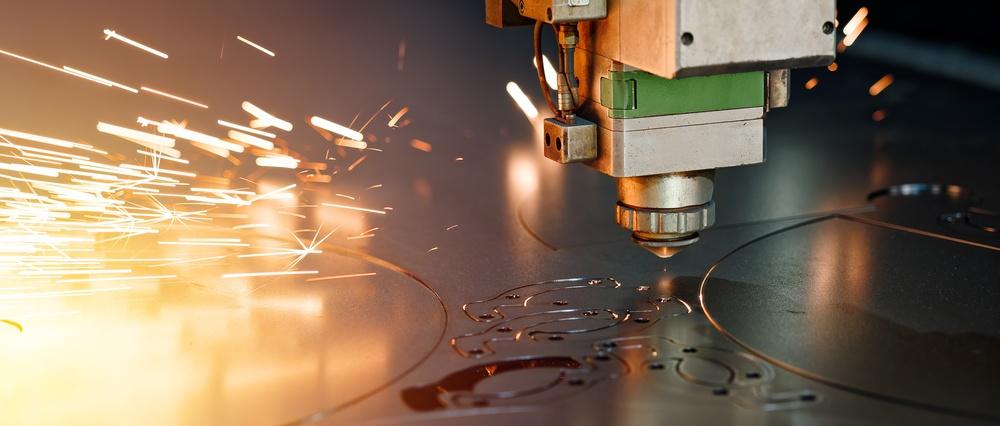
Choosing industrial tools is rarely just a matter of selecting the most powerful option available. In modern production environments, the right tool must support quality, safety, uptime, operator comfort, traceability and long-term efficiency. Whether the application involves assembly, tightening, drilling, grinding, calibration or quality assurance, every decision should begin with the needs of the process rather than the specification sheet alone.
Start with the application before choosing the tool
Before comparing models, features or technical data, it is important to understand exactly how the tool will be used. A tool that performs well in one production line may be the wrong choice in another if the fastening strategy, cycle time, material, operator movement or quality requirements are different. This is why many companies begin by reviewing guides, configuration tools and application resources, since you can find most things online before making a more detailed purchasing decision.
The starting point should be the task itself. A tightening application may require controlled torque, angle monitoring and data collection, while a material removal process may focus more on speed, precision, vibration levels and access to confined areas. In assembly environments, accuracy and repeatability often matter more than raw power. In heavy-duty maintenance, durability and serviceability may be the deciding factors.
By defining the application first, it becomes easier to avoid overbuying, underbuying or choosing a tool that creates problems later in the process. The perfect industrial tool is not necessarily the most advanced tool. It is the one that fits the operation, supports the operator and delivers consistent results over time.
Match performance with quality and process control
Industrial tools are part of a larger production system. Their performance affects not only how quickly a task is completed, but also how reliably the final product meets specification. For manufacturers working with safety-critical components, precision assemblies or regulated production standards, tool selection can have a direct impact on quality control.
Electric assembly tools, torque wrenches, controllers and quality assurance solutions can help operations achieve greater consistency by reducing variation between operators and shifts. When tools are connected to software or control platforms, they can also support traceability, process documentation and error proofing. This is especially important in industries such as automotive, aerospace, electronics and industrial machinery, where small deviations can create costly rework.
Performance should therefore be assessed in practical terms. Does the tool deliver the required torque range? Can it maintain accuracy throughout repeated cycles? Is it compatible with the controller or software already used in the production environment? Does it support the data requirements of the operation? These questions are often more valuable than simply comparing maximum output figures.
A well-selected tool should make quality easier to maintain. It should help prevent mistakes rather than merely correct them afterwards. This is why many industrial buyers increasingly look at the full tool ecosystem, including accessories, software, calibration options, operator guidance and service support.
Consider ergonomics and operator experience
The people using the tools every day should be central to the selection process. A technically capable tool can still be a poor investment if it causes fatigue, slows down movement or makes repetitive tasks more difficult than necessary. In busy production environments, operator comfort is closely connected to productivity, safety and consistency.
Weight, grip, balance, reaction force, vibration and noise all influence how a tool performs in real working conditions. A lighter cordless tool may improve mobility in some applications, while a fixtured solution or torque arm may be better suited for repetitive high-torque tasks. In other cases, operator guidance systems can reduce uncertainty by giving clear instructions during each step of the assembly process.
Ergonomics is not only about comfort. It can reduce the risk of errors caused by fatigue or awkward handling. If an operator must use excessive force, work at an uncomfortable angle or compensate for tool reaction, the process becomes harder to control. Over time, this can affect both employee wellbeing and production quality.
When evaluating industrial tools, it is therefore useful to involve the people who understand the workstation best. Maintenance teams, production engineers, quality managers and operators may each notice different requirements. A good purchasing decision often comes from combining those perspectives rather than relying only on technical documentation.
Look at integration, software and long-term scalability
Modern industrial tools are increasingly connected. For many companies, the tool itself is only one part of the investment. Controllers, software, data collection, calibration routines and service programs can be just as important as the physical equipment. This is particularly true for manufacturers that want to improve transparency, reduce downtime and build more flexible production systems.
Software solutions can help monitor performance, analyze tightening results, manage tool settings and support quality assurance. In complex operations, this visibility can make it easier to identify recurring issues, optimize processes and standardize production across multiple lines or sites. The ability to collect and use data can turn tools into a source of operational insight rather than a simple production expense.
Scalability should also be considered. A tool that meets today’s needs should ideally be able to support tomorrow’s requirements as well. Production volumes may increase, product variants may change, and quality expectations may become more demanding. Choosing tools that work within a broader platform can make it easier to expand, adapt and maintain consistency as the business develops.
Integration is not only a technical matter. It also affects training, maintenance and daily usability. If new tools fit naturally into existing workflows, teams can adopt them more easily. If they require unnecessary complexity, the investment may take longer to deliver value. The best solution is usually one that balances advanced capability with practical simplicity.
Think beyond purchase price
Price is always part of the decision, but it should not be the only measure of value. In industrial environments, the true cost of a tool includes downtime, maintenance, calibration, spare parts, training, productivity, rework and the potential cost of quality failures. A cheaper tool may become expensive if it reduces accuracy, wears quickly or cannot support the required process control.
A more suitable tool can often pay for itself through improved uptime, fewer defects, faster cycles and better operator efficiency. In applications where traceability or compliance is important, the value of reliable documentation can be significant. In high-volume production, even small improvements in speed or repeatability may have a measurable impact over time.
Service and support should also be included in the evaluation. Industrial tools need to be maintained, calibrated and repaired correctly to keep performing as intended. Access to product instructions, manuals, safety information, spare parts and expert support can make a major difference throughout the tool’s lifetime.
Choosing the right industrial tools is ultimately about building a stronger process. The ideal solution should fit the task, support the operator, protect quality and integrate with the wider production environment. When those factors are considered together, it becomes much easier to identify tools that are not only technically capable, but genuinely tailored to the specific needs of the operation.